Medical device package integrity plays a critical role in ensuring product sterility, safety, and regulatory compliance. For manufacturers and quality control personnel, a reliable medical device package must maintain a sterile barrier from production through transportation and storage. Even minor defects such as pinholes, seal channels, or material damage can compromise patient safety and lead to costly recalls.
This article provides a comprehensive introduction to the medical device package integrity test, with a focus on commonly used test methods, relevant standards, and practical guidance for implementation. By understanding the principles behind integrity testing, readers can better select appropriate methods and equipment for routine quality assurance.
Why Medical Device Package Integrity Matters
A medical device package is designed to protect its contents from microbial contamination and physical damage. During distribution, packages face compression, vibration, and environmental stress. If package integrity fails, sterility can no longer be assured.
Regulatory frameworks worldwide emphasize package integrity as a fundamental requirement. Quality audits and validations often require documented evidence that a medical device package consistently meets integrity criteria. As a result, integrity testing is not optional—it is an essential part of a compliant quality system.
Package Integrity Test Method and Industry Expectations
A package integrity test method evaluates whether a sealed package can maintain a sterile barrier under defined conditions. These methods range from dye penetration and vacuum decay to bubble emission techniques. Each approach offers different sensitivity levels, advantages, and limitations.
Among these options, destructive tests remain widely used for process validation and routine inspection. They allow direct observation of defects and provide intuitive results that operators can easily interpret.
ASTM F2096 and the Gross Leak Test
Understanding ASTM F2096
ASTM F2096 is one of the most recognized standards for detecting gross leaks in medical device packaging. It describes a pressurized bubble emission technique that identifies relatively large defects, typically down to about 250 μm under defined conditions.
This standard applies mainly to tray and pouch packages and supports both porous and non-porous materials. ASTM F2096 emphasizes that test sensitivity depends strongly on pressure settings, material characteristics, and operator control.
Gross Leak Test Principle
The gross leak test outlined in ASTM F2096 works on a simple but effective principle. The medical device package is internally pressurized and submerged in water. If a defect exists, air escapes through the failure point, forming a visible stream of bubbles.
Key factors that influence accuracy include:
- Test pressure stability
- Adequate saturation time for porous materials
- Clear differentiation between defect bubbles and normal material permeability
By carefully controlling these variables, the gross leak test delivers repeatable and meaningful results.
Test Procedure Overview
Although equipment designs vary, a typical ASTM F2096-based procedure follows several consistent steps:
- Package preparation
The medical device package is conditioned and inspected visually before testing. - Pressurization
Air is introduced into the package to a predetermined pressure suitable for the material and seal strength. - Submersion and observation
The pressurized package is submerged in water and observed for a steady stream of bubbles, indicating a leak. - Result recording
Test outcomes, pressure values, and observations are documented for traceability.
Clear documentation supports audits and demonstrates compliance with package integrity requirements.
Significance and Practical Use of Gross Leak Testing
The gross leak test serves as a practical tool in several scenarios:
- Process validation during package development
- Routine quality checks in production
- Investigation of seal failures or material defects
While ASTM F2096 does not replace more sensitive methods for microleak detection, it remains highly effective for identifying critical failures that pose immediate sterility risks.
Selecting Equipment for Medical Device Package Testing
Reliable results depend not only on standards but also on equipment quality. A well-designed tester ensures stable pressure control, clear visual inspection, and repeatable operation.
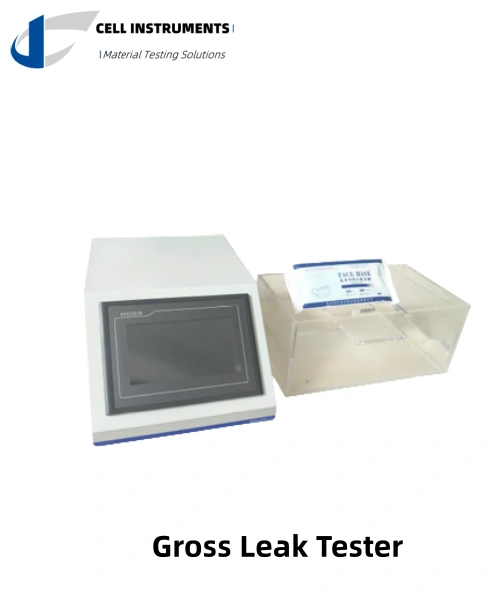
For manufacturers seeking a robust solution, the Cell Instruments GLT-01 Gross Leak Tester offers practical advantages for ASTM F2096 testing. Its controlled pressurization system and user-friendly design help operators perform consistent medical device package integrity evaluations across different package sizes and materials. When integrated into a quality system, such equipment supports both efficiency and compliance without adding unnecessary complexity.
Best Practices for Reliable Package Integrity Testing
To improve confidence in test results, quality teams should consider the following best practices:
- Establish test pressure through preliminary trials
- Train operators to recognize valid bubble patterns
- Maintain consistent test conditions and documentation
- Periodically verify equipment performance
These practices strengthen the overall integrity testing program and reduce the risk of misinterpretation.
Conclusion
A dependable medical device package integrity test program safeguards patient safety and supports regulatory compliance. By applying the ASTM F2096 gross leak test correctly, manufacturers can effectively detect critical packaging defects and validate sealing processes. With appropriate methods, disciplined procedures, and reliable equipment such as those offered by Cell Instruments, package integrity testing becomes a controlled, repeatable, and value-adding activity within medical device quality management systems.
 FI
FI  EN
EN  AR
AR  BG
BG  CS
CS  DA
DA  DE
DE  EL
EL  ES
ES  ET
ET  FR
FR  HU
HU  ID
ID  IT
IT  JA
JA  KO
KO  LT
LT  LV
LV  NB
NB  NL
NL  PL
PL  PT
PT  RO
RO  RU
RU  SK
SK  SL
SL  SV
SV  TR
TR  UK
UK